
General News
Five in Six Ghana Health Facilities Fall Short of Basic Sanitation Standard – WHO/UNICEF

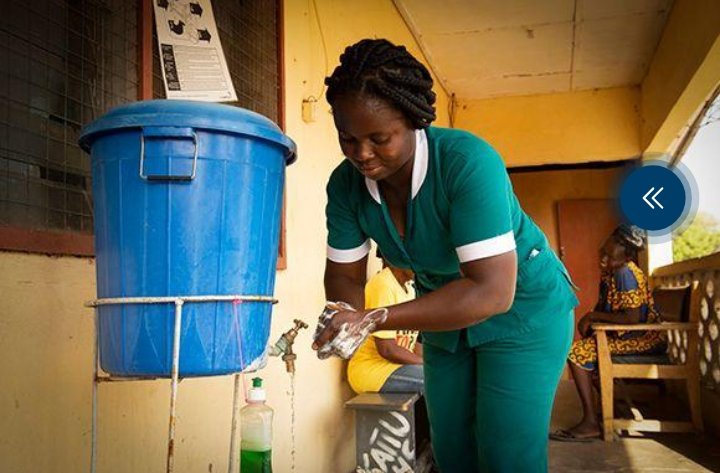
Only 16% of health care facilities in Ghana met the basic sanitation standard in 2025, meaning roughly five out of every six facilities failed to meet the full requirements, according to the latest assessment by the World Health Organization (WHO) and the United Nations Children’s Fund (UNICEF).
The findings are contained in the WHO/UNICEF report, Progress on Water, Sanitation, Hygiene, Environmental Cleaning and Waste Management in Health Care Facilities 2015–2025.
The report explains that basic sanitation goes beyond simply having a toilet on a health facility’s premises. Facilities must have improved and usable sanitation facilities, including a toilet dedicated to staff, sex-separated toilets with menstrual hygiene provisions, and facilities accessible to people with limited mobility.
In Ghana, 74% of health facilities had limited sanitation services, while another 10% had no sanitation service in 2025.
Ghana’s performance also falls significantly below the global average. While 40% of health facilities globally met the basic sanitation standard in 2025, the figure for sub-Saharan Africa was 23%, compared with Ghana’s 16%.
Sanitation was the weakest-performing area among the major water, sanitation and hygiene (WASH) indicators assessed in Ghana.
The country recorded 65% coverage for basic water services, 54% for basic hygiene services, and 27% for basic healthcare waste management, compared with just 16% for basic sanitation.
The report found that 65% of Ghanaian health facilities had basic water services in 2025, meaning water from an improved source was available on the premises. However, 35% had only limited water services.
On hygiene, 54% of health facilities met the basic standard, which requires functional hand-hygiene facilities at points of care and appropriate handwashing facilities at toilets. Another 42% had limited hygiene services, while 4% had none.
Healthcare waste management also remains a concern. Only 27% of health facilities in Ghana met the basic waste-management standard in 2025. Under the WHO/UNICEF standard, healthcare waste must be properly segregated, with sharps and infectious waste safely treated and disposed of.
The report recorded limited waste-management services in 54% of Ghanaian facilities, while 19% had no such service. Globally, 71% of health facilities met the basic waste-management standard, although the sub-Saharan African figure was 24%.
The WHO and UNICEF findings highlight concerns about patient safety, infection prevention, accessibility and dignity, particularly for patients, health workers, pregnant women, women and girls, and persons with limited mobility.
Globally, the 2025 figures show that 85% of health facilities had basic water services, 40% had basic sanitation, 72% had basic hygiene services, 59% met the standard for environmental cleaning, and 71% had basic healthcare waste management.
The findings underscore the need for stronger investment in water, sanitation and hygiene infrastructure in Ghana’s health facilities to ensure safe and dignified healthcare delivery.
Source: WHO/UNICEF